[ad_1]

(Photo courtesy of Lubbock)
LUBBOCK, Texas (PRESS RELEASE): The following is a press release from the City of Lubbock:
On Wednesday, October 13, 2021, the Lubbock City Department of Public Health, along with city representatives and other community entities, will host the second Source to Solution Addiction & Recovery symposium at the Lubbock Memorial Civic Center.
The one-day conference will address different aspects of substance use, from prevention to recovery, and their effect on the community and citizens. This event will feature dedicated law enforcement professionals, health care, treatment centers, academics, local recovery resources, as well as people on their own recovery journey.
The symposium will take place from 8:00 to 16:00. Registration is free and includes breakfast and lunch.
After the symposium at 6 p.m., there will be a fundraising dinner in honor of Dr. Carl Andersen in the Civic Center banquet hall. All proceeds from the dinner ticket will be donated to the Andersen Family Endowment Scholarship Fund.
For additional information and tickets for dinner, visit mylubbock.us/SourceToSolution.
(Lubbock City Press Release)
[ad_2]
Source: https://www.everythinglubbock.com/news/local-news/source-to-solution-addiction-recovery-symposium-on-oct-13-offers-resources-insight-scw/
[ad_2]Methadone Clinics Nearby – Methadone Clinic New York City – Methadone Clinics USA
[ad_1]
Harold Lewis has been battling drug addiction for years, but he recently started thinking that recovery could be fun.
The 59-year-old former chef won small prizes — candy, gum, gift cards, sunglasses and headphones — for attending meetings and staying in opioid addiction treatment during a 12-week program in Bridgeport , Connecticut.
“Recovery should be fun because you get your life back,” Lewis said.
For a growing number of Americans, addiction treatment involves not only hard work but also earning rewards, sometimes as much as $500, for testing negative for drugs or showing up for counseling or meetings of group
There is brain science behind the method, which is known as contingency management. And barriers to wider adoption of rewards programs, such as government concerns about fraud, are beginning to crumble.
“We’re in a state of desperation where we have to pull out all the stops and this is something that works,” said Dr. James Berry, who directs addiction medicine at West Virginia University.
Overdose deaths in the United States hit an all-time high during the pandemic. While opioids are the main culprits, deaths involving stimulants like methamphetamines are also on the rise. People often die with multiple drugs in their system.
Medications can help people stop abusing opioids, but stimulant addiction has no effective medication. Rewards programs, especially when the value of the dollar increases with consistent performance, are widely recognized as the most effective treatment for people addicted to stimulants.
Since 2011, the US Department of Veterans Affairs has used the method with 5,700 veterans. Rewards are vouchers that vets redeem at their local canteen. Over the years, 92 percent of urine tests given to these veterans have come back negative for drugs, said Dominick DePhilippis of the VA’s substance use disorder program.
When done right, reward programs can be a bridge from the tough days of early recovery to a better life, said Carla Rash, an associate professor of medicine at UConn Health who studies the method. It helps people make better decisions in the moment, tipping the scales when the immediate rewards of drug use are hard to resist.

![Youtube video thumbnail]()
(AP Video/Emma H. Tobin)
Rewards can “provide some recognition for people’s efforts,” Rash said.
For Casey Thompson, 41, of Colville, Washington, the first month after quitting meth was the worst. Without stimulants, he felt drained and exhausted.
“Even standing up, you can fall asleep,” Thompson said.
Earning gift cards for passing drug tests helped, he said. During her 12-week program, she received about $500 in Walmart gift cards that she spent on food, T-shirts, socks and shampoo. He is a trained welder and is looking for work after a recent layoff.
“I’m a totally different person than I was,” Thompson said. “I was already planning to be clean, so it was more.”
More than 150 studies over 30 years have shown that rewards work better than counseling alone for addictions such as cocaine, alcohol, tobacco and, when used in conjunction with medication, opioids.
The method is based on brain science. Psychologists have known for years that people who prefer small, immediate rewards to larger, delayed rewards are vulnerable to addiction. They may promise to quit every morning and start using again in the afternoon.
And neuroscientists have learned from imaging studies how addiction takes over the brain’s reward center, hijacking dopamine pathways and robbing people of their ability to enjoy simple pleasures.
“It uses a lot of the same dopamine reward system that is the basis of addictions to promote healthy behavior change,” said University of Vermont psychologist Stephen Higgins, who pioneered the method in 1991. Their recent research shows that it helps pregnant women quit and quit smoking. improves the health of your babies.
“Biologically, substance use lights up the same part of the brain that lights up when a person wins the lottery, falls in love, or experiences something really positive and exciting,” said psychologist Sara Becker of the Northwestern University.
The same path is lit if someone wins a reward.
“That’s part of what’s so powerful about these programs,” Becker said.
Support has never been stronger. The Biden administration supports the method in its National Drug Control Strategy. This fall, California will launch a pilot program designed to reward $10 gift cards that pass drug tests for stimulants. Oregon will use tax revenue from the state’s legal marijuana industry to pay for similar incentives. Montana launched a program in March with a federal grant.
The U.S. Department of Health and Human Services is working to revise its guidelines on how much government grant money can be spent on prizes, rewards and cash cards. Researchers say the current cap of $75 per patient is arbitrary and ineffective and should be increased to $599.
The method “is a widely studied and proven intervention that has been successful in treating people with a variety of substance use disorders,” said Dr. Yngvild K. Olsen, who directs the Center for Treatment of substance abuse by the US government.
Rewards programs can be low-tech, pieces of paper out of a fishbowl, or high-tech, with “smart” debit cards programmed so they can’t be spent at liquor stores or converted to cash at an ATM.
Maureen Walsh is a 54-year-old Philadelphia flower shop owner who avoids opioids with the help of a smartphone app called DynamiCare. When you pass a saliva test, you earn cash with a smart card. She uses the money to treat herself to a new pair of shoes or donate to a favorite cause.
“The payoff for me was knowing I was clean and the test proved it,” Walsh said.
For Lewis, the Connecticut man in opioid recovery, a weekly prize draw became a way to bring home gifts for his mother.
“The awards make me feel good,” he said. “But the awards make my mother feel very good. I’m talking about Tony the BIG Tiger!”
On a recent summer day, Lewis had earned a chance to draw 10 slips — 10 chances to win prizes, including a tablet. The grand prize eluded him, but he won six small prizes and $20 in grocery gift cards.
“Recovery isn’t all fists and clenched teeth, you know what I mean?” Lewis said later. “It can be fun, where you can exhale and you can breathe in and get excited, because you don’t know what you’re going to win today.”
___
AP video reporter Emma H. Tobin contributed to this report.
___
The Associated Press Department of Health and Science is supported by the Department of Science Education at the Howard Hughes Medical Institute. The AP is solely responsible for all content.
[ad_2]
Source: Candy, cash, gifts: How rewards aid addiction recoveryMethadone Clinics In My Area – Methadone Clinic NYC – Methadone Clinics USA

“Trust is the glue of life. It’s the most essential ingredient in effective communication. It’s the foundational principle that holds all relationships.” ~ Stephen Covey
I recently talked to a mom who is having a hard time with trust issues.
Her son, Kyle, is in his early 20’s. Kyle is currently finishing up with a treatment program because of his meth use. Kyle has had many relapses, which has been frustrating for his mom.
In the spring of last year, Kyle made up his mind that he was not going to use meth any longer. After all the trouble he had experienced, Kyle felt ready to stop using drugs. Kyle went through an outpatient program and was on a healthy path. Also, he had gotten a job and was talking about going back to school.
Then one night, he asked his mom if he could use the car to visit some friends. She was hesitant, but since he had been doing so well, she agreed. Kyle came home on time and had stayed sober. Then Kyle asked the following weekend to go out with some friends, and again things went well. The next week, he wanted to visit some old buddies from high school. His mom said yes, as she was feeling more confident that he was finally in a stable place.
He didn’t come home that night, and when he did arrive home the next day, Kyle’s mom knew he had been using meth again. She was crestfallen. She didn’t want to see her son back on that path.
After a few more incidences of drug use, Kyle agreed to go to an inpatient program. Now Kyle is ready to take the next step, which for him is sober living. His mom is now anxious again about Kyle’s future and wonders if he’ll stick to his recovery plan.
Can you relate?
Has your child had starts and stops to their recovery?
Sending your son or daughter off to treatment can be a huge relief.
You can get off that long and chaotic road of not being able to trust your son or daughter.
It is an important milestone when your child decides they are ready for help.
Yet there is that inevitable day when your child, like Kyle, finishes rehab. They most likely are either coming home, going to sober living, or living on their own. Your anxiety may start to get the better of you as that day approaches.
Thoughts of your child going back to their drug use may take you back to feeling worried and stressed.
So how do you build trust again after so many disappointments in the past? Remember, your child needs to earn your trust. Often they do, but it is not immediate.
“As soon as you trust yourself, you will know how to live.” ~ Johann Wolfgang von Goethe
As a parent, you can help the process of rebuilding trust.

Here are five things to consider as you maneuver back to having a positive relationship with your child.
Have patience.
Restoring trust is going to take time. During the first year or at least the first few months, expect to feel skeptical of what your child is doing. When you see that your child is doing well, your trust will be restored. Don’t assume trust will develop overnight. It may take a few months of positive behavior before you feel comfortable trusting your child again. Have patience with the process. Your child is learning to trust himself again.
Keep lines of communication open.
Spend time with your child and have open conversations. Sharing information in a kind considerate way leaves the door open for him or her to do the same. Positive communication supports the change process. For each person, recovery will look different. You could ask your child what you can do to help if that feels appropriate for your situation. Use open-ended questions, so there is less defensiveness.
Let your child take the lead.
While it may be tempting to try to manage your child’s recovery, this is a time to step back and let them take the lead. Do your best not to ask your son or daughter if they’ve gone to a meeting or some other invasive question about their recovery. Through the treatment process, your child has hopefully discovered what change is going to look like for them.
Let them know that you trust them to make healthy decisions. That gives your son or daughter a better chance of living up to your expectations.
Remember that past lying and other harmful behavior served a purpose. The change process provides an opportunity for your child to practice being truthful. As long as you see behavior that feels right to you, the chances are good that your child is staying trustworthy.
Practice C.A.R.D.
Carole Bennett, in her article, “Rebuilding Trust in the Recovery Process,” has developed an acronym for what family and friends should be experiencing as their loved ones’ recovery process strengthens:
C.A.R.D.
Credibility = trustworthy
Accountability = answerable for
Responsibility = fulfilled obligation
Dependability = reliable
She goes on to say, “Through the addiction process, an enormous amount of trust is broken. The collective “C.A.R.D.” acronym means trust, and when the credibility, accountability, responsibility, and dependability become everyday occurrences, then trust can start to be restored again.”
Again, this is a process that takes time.

Don’t expect perfection.
With any change, there are many starts and stops. Hopefully, with the treatment that your child has experienced, they are ready to embrace change. Yet, everyone makes mistakes. If your child makes a mistake, help him get back on track as soon as possible. If your child is trying, appreciate the effort they are making,
We are all human. Your child is bound to make a mistake on occasion. With time and effort, things should begin to smooth out. You can still build trust with your child even though the road is not a straight line.
Notice what your child is doing well.
Trust builds when you can see one affirmative action after another. Research shows that when you acknowledge positive behavior, the chances are higher that it will occur again. Be on the lookout for what your child is doing well. They have taken a big step to change their life. When you support their actions, in the form of words or rewards, it will go a long way to keeping them on their path to recovery. This will help with building trust. Your child needs you now more than ever. As the positive momentum builds, so will the faith you have in your son or daughter.
After four months in sober living, Kyle continues to do well. He and his mom have stayed close and talk often. Their trust in each other has continued to grow. They are both seeing the light at the end of a dark tunnel.
By: Cathy Taughinbaugh
Title: How to Rebuild Trust After Rehab
Sourced From: cathytaughinbaugh.com/how-to-rebuild-trust-after-rehab/
Published Date: Sat, 07 Mar 2020 17:53:39 +0000
Methadone Clinics Nearby – Methadone Clinic New York City – Methadone Clinics USA
[ad_1]
Contact: Steven Lee, 210-450-3823, lees22@uthscsa.edu
SAN ANTONIO, Dec. 13, 2022 – With the United States facing an unprecedented opioid overdose crisis, the University of Texas Health Science Center at San Antonio (UT Health San Antonio) has received a grant of 1.8 million dollars from the National Institutes of Health to research peer recovery support services for people living with opioid use disorder.
Although medications for opioid use disorder may reduce rates of illness or death, data suggest that some support services aid treatment and sustain long-term recovery.
These services may include emergent “peer” support, in which people with lived experience of addiction are specially trained to support others in their recovery by providing non-clinical links to treatment, such as mentoring, referrals for illnesses medical, occupational training, housing and education. However, there are gaps in knowledge of the approach that limit wider adoption.
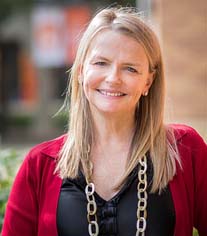
 Jennifer Sharpe Potter, PhD
“That’s what this new grant is designed to address,” said Jennifer Sharpe Potter, PhD, MPH, vice president for research and professor of psychiatry and behavioral sciences at UT Health San Antonio, and principal investigator of the grant funding. NIH. She is also the executive director of Be Well Texas, a statewide initiative of UT Health San Antonio funded by Texas Health and Human Services, which provides equitable access to substance use disorder (SUD) treatment and care.
“We propose a research network that will provide systematic integration and collaboration between researchers and community organizations and develop a pipeline of future recovery scientists to close empirical and practice gaps in Peer Recovery Support Services, or PRSS Potter said.
Focus on stakeholder engagement
The stakes are high for the effort, amid a backdrop of 107,000 opioid-related drug overdose deaths in the United States in the 12 months ending in January 2022, according to the Centers for Disease Control .
The Peer Recovery Innovation Network, the name of the new research network under the grant effort, will focus on stakeholder engagement in setting the research agenda, improve the infrastructure for scientific research of PRSS recovery and will accelerate the growth of the PRSS evidence base in priority areas and populations, with training and telementoring as key approaches.
“We will use the innovative Extension for Community Health Outcomes model, ECHO,” said Adrienne Lindsey, DBH, MA, director of the Center for Substance Use Training and Telementoring at UT Health San Antonio. “This telementoring model will be used to expose researchers and clinicians interested in recovery support services and recovery science to the latest research findings and best practices, as well as provide a platform to vet the work of ongoing research to obtain critical feedback from peers and subject. experts in a growing field.”
Expanding the science of recovery
The effort will expand the science of recovery by developing a research program on PRSS during opioid use disorder medication through a novel research agenda-setting approach and a process of associated collaboration, training and mentoring and infrastructure development.
Specific objectives include:
- Establish a Recovery Science Collaboratory to include multiple stakeholders, including people with lived recovery experience, to accelerate the pace of innovation in recovery science.
- Establish a recovery science training and telementoring program within the UT Health San Antonio Substance Use Training and Telementoring Center to rapidly expand the recovery science workforce.
- Conduct process-, outcome-, and implementation-based evaluations of the Peer Recovery Innovation Network and Networked Recovery Science Initiative to optimize impact, efficiency, and effectiveness in advancing recovery science and monitoring outcomes through defined measures.
“We believe all of this will inform the development and expansion of services and strengthen the system of care that people with opioid use disorders can use to initiate and maintain recovery,” Potter said.
University of Texas Health Science Center at San Antonio (UT Health San Antonio), a major driver of San Antonio’s $44.1 billion health and life sciences sector, is the largest research institution in South Texas with an annual research portfolio of $360 million of dollars With substantial economic impact with its six professional schools, a diverse workforce of more than 7,900, an annual operating budget of $1.08 billion, and clinical practices that provide 2.6 million patient visits each year, UT Health San Antonio plans to add more than 1,500 higher wages. jobs over the next five years to serve San Antonio, Bexar County and South Texas. To learn about the many ways we “Make Lives Better®,” visit UTHealthSA.org.
Stay connected with The University of Texas Health Science Center at San Antonio on Facebook, Twitter, LinkedIn, Instagram and YouTube.
[ad_2]
Source: UT Health San Antonio awarded $1.8 million NIH grant for addiction recovery support services researchMethadone Clinic Near Me – Methadone Clinics New York – Methadone Clinics USA
[ad_1]
Oregon’s first-in-the-nation drug decriminalization measure has been heavily scrutinized since voters approved it two years ago, but as state funding finally begins to trickle down to addiction service providers, advocates say who are starting to see results.
“It’s going to take a long time to fully see what’s going on,” said Hannah Studer, deputy director of the behavioral health nonprofit Bridges to Change. “We have to stay the course because this is life or death and this is really building a whole new future for the state that the state deserves.”
Measure 110 passed with 58% of the vote in 2020. It decriminalized possession of personal use amounts of hard drugs, including heroin, methamphetamine, and fentanyl, and redirected a significant portion of sales tax revenue the state’s marijuana, which had previously gone to schools, police and local governments — to fund grants for addiction services.
But critics accuse the law of fueling addiction and crime in parts of the state, particularly Portland, and the measure became a hot topic in this year’s gubernatorial race.
“It’s worked really well for drug dealers and drug users because we have an outdoor drug market,” said David Potts, president of the Association for Lent Neighborhood Life.
Portland Police Association President Aaron Schmautz told Fox News in September that police don’t want to see “mass incarceration as a result of low drug use” and should prioritize treatment.
 critics accuse the law of fueling addiction and crime in parts of the state, especially Portland.Getty Images
“But you need some teeth for that,” Schmautz said. “There has to be a way to require this treatment.”
Drug possession is now a Class E misdemeanor, punishable by a maximum fine of $100, which people can have waived by calling a hotline and completing a treatment evaluation. Oregon Health & Science University chief of addiction medicine Dr. Todd Korthuis said few people are calling the hotline, and most are only doing so to get their subpoena waived .
“Only 1 percent of those ticketed for drug possession requested information about treatment resources,” he told a state senate committee earlier this year. “In my conversations with treatment leaders across the state, not a single patient has had a patient enrolled in treatment because of these tickets.”
Of the 3,645 summonses issued through November, 68 percent ended in a conviction because the suspect failed to appear in court, according to the Oregon Department of Justice.
Ron Williams, director of outreach for the Health Justice Recovery Alliance, which advocates for Measure 110, isn’t concerned about the lack of participation and believes people should be able to seek recovery services on their own terms.
“There is very little evidence that coercive treatment works,” Williams said. “Most people who use drugs recreationally don’t think they have a problem and therefore don’t think they need treatment. So why would you force them into treatment?
A tourniquet flies from the arm of a 28-year-old man who just injected heroin in Portland, Oregon.Portland Press Herald via Getty
The slow rollout of the measure also raised concerns. Although the decriminalization took effect on February 1, 2021, the state did not approve the bulk of the grants until the end of August.
“We know there have been delays from the state in getting funds to providers,” Studer said. “However, we now have the funds and can really begin to provide the services that are desperately needed in Oregon.”
The state has now awarded $302 million in grants for harm reduction, overdose prevention, recovery housing and more. In most cases, it cannot be used for residential treatment of patients, which is primarily funded by Medicaid, Williams said.
Bridges to Change received about $12.5 million, which Studer said saved one of its programs that was on the verge of closing due to lack of funding and will allow them to hire dozens more employees and fund 202 new beds .
“Women in our women’s housing programs who can have a safe place for themselves and their children,” Studer said. “People from more rural areas of Clackamas [County] who were never able to access supportive housing, who have now paid for supportive housing to live in it for as long as they need.”
But Oregon’s addiction rate remains one of the highest in the country.
“We’ve seen an increase in overdose,” Schmautz said. “We are having a huge epidemic of fentanyl and other drugs in our community.”
Drug overdose deaths have increased nationwide since the start of 2020, according to the Centers for Disease Control and Prevention. Williams argued that Oregon’s increase in overdose deaths remains below the West Coast average, so it’s not fair to blame Measure 110.
“Substance use shouldn’t be a criminal matter. It’s a health issue,” Williams said. “The idea is to transform from a criminal justice approach to a health, science-backed, health-based approach.”
Notes: Provisional counts for 12-month periods ending July of each year (the most recent month for which data were available). Projected provisional counts represent estimates of the number of deaths adjusted for incomplete reporting.CDC
Schmautz agreed that addiction is a medical problem, but attributed many of the “social ills” facing Portland to addiction.
“Homelessness going through the roof, mental illness … low-level crime and even homicides and other things,” he said.
Williams said it’s not fair to pin the increase in crime on Measure 110, since the only thing the law legalizes is personal drug use.
“Stealing is still a crime. Carjacking is still a crime. Theft is still a crime,” Williams said. “Homelessness, crime, these problems existed before Measure 110 was on the ballot and they were increasing before Measure 110.”
For decades, police used possible drug possession as a pretext to stop and search people, Williams said.
“Across the country, these people have been black and brown,” he said. “So that kind of diminishes … those negative impacts on people in communities of color. And it transforms the nature of substance use from being something that’s punished to something that’s served.”
Overall, Studer encouraged the patience of Oregonians, who he said deserve better than the old approach to addiction.
“Deserving better will take time,” he said.
[ad_2]
Source: Oregon must ‘stay the course’ on soft heroin laws despite soaring overdose rates: drug law advocatesMethadone Clinic In My Area – Methadone Clinics New York City – Methadone Clinics USA
[ad_1]

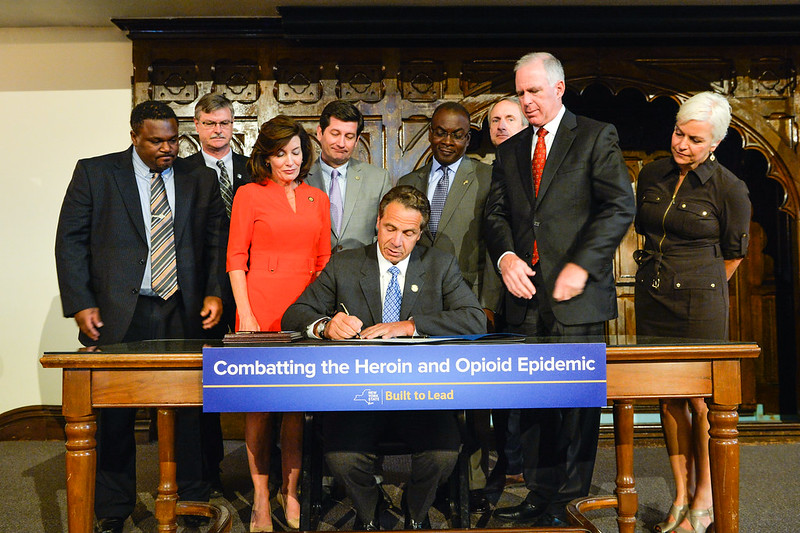
Then, governor. Cuomo signs legislation (photo: Darren McGee / Office of Governor Andrew M. Cuomo)
After the highest number of overdose deaths recorded in New York State in a single year, advocates and substance treatment providers are asking Gov. Kathy Hochul to sign what they call crucial legislation to reverse the trend. . They say without the new governor’s signature, the state’s newly established two-tier substance use treatment system, with more barriers to access for lower-income New Yorkers, will continue and cause more damage.
Drug-assisted treatment (MAT) is a proven tool to help people suffering from substance use disorders. It prevents overdoses, emergency room visits and hospitalizations, and ultimately saves lives. But until recently, New York State required insurers to provide prior authorization to physicians before they could prescribe MAT drugs, such as buprenorphine and methadone, to patients.
In late 2019, then-Governor Andrew Cuomo signed a bill that removed prior authorization for commercial insurers, expanding access to life-saving drugs. But with the same pen, he vetoed another bill that would have removed this regulation for Medicaid, on which the lowest incomes depend, mostly black, Latino, and Asian New Yorkers. The governor’s decisions effectively created two separate systems, removing barriers for commercially insured patients, keeping them in place for Medicaid enrollees.
This Friday, October 1, the state health department is also set to establish a new state form for MAT drugs, taking a unique approach to a much more complicated issue.
“When it comes to anything in healthcare, a one-size-fits-all fit doesn’t fit all patients and your healthcare provider should have the right to decide which treatment works best for you,” said Sen. Pete Harckham, who sponsored both bills to remove prior authorization.
Following Cuomo’s veto, the state legislature passed the Medicaid-related bill this year with overwhelming bipartisan support, as part of an overdose prevention package. Lawmakers, advocates and treatment providers are optimistic, as they urge Governor Hochul to sign the bill that Cuomo vetoed earlier.
Cuomo’s reason for vetoing the bill was that it would increase state spending on Medicaid. But, as advocates point out, this argument was flawed and ignores the cost of human lives to prevent access to MAT drugs. A 2019 RTI International report for the Legal Action Center, a group of nonprofit legal and advisory services, found that removing a prior authorization would save nearly 600 lives each year in New York, would mean a cost savings for to Medicaid of about $ 52 million annually and would reduce hospitalized hospital admissions and emergency room visits by 42%.
Dr. Justine Waldman, CEO of REACH Medical, an Ithaca-based harm reduction provider, said patients with drug-assisted treatment would benefit from a variety of drugs instead of a single drug that can be allow according to the new state policy. “Given that it’s a drug that keeps people alive, we really need to have that flexibility to find the drug that works for them,” he said.
Any additional administrative hurdles can reduce participation in treatment programs, Waldman said, and without first reducing opioid use, the state cannot eliminate it. “If you do it all based on the elimination of use completely, you will not treat a disease process, but you will treat a kind of moral process,” he said.
The need for greater action against the overdose crisis has also never been more urgent. In 2020, overdose deaths increased nationally by about 30%, to more than 93,000. In New York, the Cuomo administration reduced funding for syringe exchange programs, forcing many providers to lay off staff and reduce services, further aggravating the crisis and causing increases in overdoses and outbreaks of STDs. , according to experts. According to the latest CDC data, New York reported 5,129 overdose deaths between February 2020 and February 2021, 34.3% more than the 3,817 overdose deaths in the same period from 2019 to 2020.
“New York State should do everything possible to make sure we’re changing the current,” said Jasmine Budnella, drug policy coordinator for VOCAL-NY, an advocacy and services group.
“We have a time in New York to chart a whole new path and there has never been a better time to have true statewide leadership to sink into interventions and solutions,” he added.
Budnella is among advocates who spent months negotiating with the Cuomo administration to allow greater access to MAT drugs, especially for those taking Medicaid. But even though the administration agreed to enforce these demands through a policy, the new drug formulary does not achieve the goal. Instead of making sure that all MAT medications would be “preferred” and therefore do not require any prior authorization, several medications continue to require it and have dosage limits.
“[W]If you had, there was an indication that the Cuomo administration wasn’t too concerned about creating this two-tier system and specifically about not expanding access for the Medicaid population, which are obviously low-income color communities. ” said Christine Khaikin, a lawyer at the legal action center.
Hochul, a Democrat with just over a month in office as governor, has expressed interest in tackling the crisis of substance use and overdose more fully. In her first public speech as governor, she spoke about her own personal experience as she had lost her nephew to a fentanyl overdose in 2017 and said the issue would be the top priority.
“Too many of our families have had to deal with this spectrum of dealing with someone and have sometimes lost someone they were deeply concerned about because of addiction,” he said on Aug. 26 when he announced Senator Brian Benjamin as Lieutenant Governor. “So for these families, I know the pain that is going on and we will make sure we do everything in our power to stop it,” he added.
“The fight against the opioid epidemic is a top priority for Governor Hochul, as he has been co-chair of the New York Heroin and Opioid Working Group for years,” Governor’s spokeswoman Haley Viccaro said in a statement. reported in Gotham magazine. “She was also personally affected by the crisis and lost a nephew to addiction several years ago. Governor Hochul will continue to fight for protections for New Yorkers fighting substance abuse in collaboration with affected families and groups. The governor is reviewing the legislation and will soon have more to say about it. “
Hochul’s comments have been encouraging for those who have worked on substance use legislation for years. “It’s refreshing to have a governor who understands the pain, grief, and frustration New York State has gone through over the overdose crisis,” Budnella of VOCAL-NY said.
“I think she’s been a lot more willing than her predecessor to take on some of these issues,” said Senator Harckham, a Hudson Valley Democrat who chairs the alcoholism and substance abuse committee and has been shown. open about their own struggles with substance use.
As Harckham noted, the state is also about to have federal aid funds to combat the overdose crisis and is expected to receive up to $ 1.6 billion through lawsuits against manufacturers and distributors. of opioids filed by the Attorney General’s Office Letitia James.
“Therefore, we will have new revenue in state coffers that will be aimed at addressing substance use disorder, and that drug-assisted treatment and equity in drug-assisted treatment should be at the top of the list.” , said Harckham.
For providers, Hochul’s focus is on lives rather than cost. “This is a governor who will really pay attention to health equity and put health equity above its cost, and that makes me very hopeful that this is our governor,” Waldman said.
[ad_2]
Source: https://www.gothamgazette.com/state/10797-overdose-deaths-two-tiered-addiction-treatment-new-york
[ad_2]Methadone Clinic In My Area – Methadone Clinic New York City – Methadone Clinics USA



 Jennifer Sharpe Potter, PhD
 critics accuse the law of fueling addiction and crime in parts of the state, especially Portland.
 A tourniquet flies from the arm of a 28-year-old man who just injected heroin in Portland, Oregon.
 Notes: Provisional counts for 12-month periods ending July of each year (the most recent month for which data were available). Projected provisional counts represent estimates of the number of deaths adjusted for incomplete reporting.