[ad_1]

Gilliam County Commissioner Pat Shannon voted to put a psilocybin ban measure on the ballot. He is not convinced that psilocybin therapy can help illnesses such as depression, anxiety and addiction.
Kristian Foden-Vencil / OPB
Your browser does not support the audio element.
Pat Shannon is a restaurateur and curator from Gilliam County in North Central Oregon.
He and two county board colleagues put before voters this November a ballot measure that will exclude Gilliam County from Oregon’s new psilocybin therapy program.
He’s also a recovering alcoholic: “I had always been a daily drinker,” he said during a recent conversation at the Condon Chamber of Commerce. “Since the day I left high school.”
Shannon hasn’t hit a single drop in 37 years; today he still attends meetings and sponsors three recovering alcoholics. So he said he tends to see things through the lens of addiction, and he’s not convinced that using psilocybin to deal with depression, anxiety, addiction or other mental health works.
“I just don’t see where you’re going to get any discovery from going on a mushroom trip,” Shannon said.
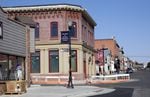
High Street in Condon, Oregon, October 2022. Most people OPB spoke to in Condon say they don’t like what the legalization of cannabis has done in Oregon and aren’t convinced psilocybin works.
Kristian Foden-Vencil / OPB
Measures to ban psilocybin are on the November ballot in 104 cities and 27 of Oregon’s 36 counties; which includes Gilliam County and the City of Condon. But Shannon said the problem isn’t on people’s radars.
“Members of the Gilliam County community probably don’t even understand the details,” he said.
Shannon said that for many people, the use of psilocybin is just being incorporated into Measure 110.
Oregon voters agreed in 2020 to eliminate criminal consequences for possession of small amounts of illegal drugs, such as heroin and cocaine. Instead of taking someone to jail for possession, police can now only issue an infraction, such as a traffic ticket, of up to $100. People can avoid this fine if they are willing to contact an addiction service.
The goal is to push people toward recovery, not the criminal justice system.
Shannon doesn’t buy it. And he sees a direct line between Measure 110, the drug decriminalization effort, and Measure 109, which voters also approved in 2020. It legalized the use of psilocybin in therapeutic settings. Regulators are now drafting the precise policy guidelines that will govern the program, which will take effect in January.
Shannon worries that psilocybin is a gateway drug, whether it’s addictive or not.
The new psilocybin therapy program does not allow people to simply buy the drug and take it home, like cannabis. But Shannon believes the program will normalize the use and abuse of psilocybin.
To be clear, the new program involves people meeting with a facilitator several times, discussing why they want to take psilocybin, and being closely monitored while using the drug. This system is time consuming and likely to cost thousands rather than hundreds of dollars.

Nurse Carol Phillips has helped drug patients many times and does not believe psilocybin therapy should be allowed in Gilliam County.
Kristian Foden-Vencil / OPB
Still, most people this reporter spoke with in Gilliam County share Shannon’s views. They say they don’t like what the legalization of cannabis has done in Oregon, and they’re not convinced that psilocybin works.
Nor have they seen any advertising on the subject or spoken to any canvasser.
“Things like this are really dangerous,” said Carol Phillips, a local nurse. “People will abuse it and then blame a doctor or someone innocent.”

Retiree Debra James has seen people take hallucinogenic mushrooms and they didn’t like the results.
Kristian Foden-Vencil / OPB
Disabled retiree Debra James said she has seen people take hallucinogenic mushrooms in the past.
“The bottom line is not good,” he said. “They were freaking out. Like maybe too much. They were not comfortable. They were upset. They were scared.”
James said he doesn’t think a facilitator is helpful on a bad trip, whether or not he’s trained and licensed.
Such sentiments are not news to Sam Chapman, the executive director of the Healing Advocacy Fund, a group created to introduce psilocybin to Oregon.
“It’s not entirely surprising that certain aspects of the state are simply saying they’re not ready to move forward with this,” Chapman said. “That’s fine. We’re ready to meet anyone and everyone wherever they are, and we recognize that it takes time.”
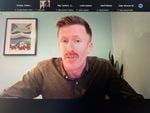
Sam Chapman, executive director of the Healing Advocacy Fund, said he’s not surprised that many Oregonians are questioning the idea of psilocybin therapy, even though most voters agreed to allow it.
Kristian Foden-Vencil / OPB
Chapman believes attitudes will change as the program rolls out in 137 cities and 10 counties next year. He believes people will be more accepting when they see how psilocybin helps.
Chapman also notes that there are volunteers who go door-to-door in rural areas, trying to educate people about psilocybin therapy. Maybe not so much in Gilliam County, but certainly in places like Jackson County.
That’s because in Jackson County, big cities like Medford and Ashland are pushing ahead with psilocybin, while county voters are considering an opt-out vote.
Ashland Mayor Julie Akins has a husband who is a Vietnam vet. He had a stroke, became depressed and lost his sense of balance. She thinks psilocybin might help.
“If you don’t want this therapy, you don’t have to get it,” Akins said. “But making it unavailable to people who need it doesn’t make any sense to me.”
Deactivation will only mean that sick people will have to travel for treatment, he said.
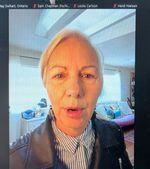
Ashland Mayor Julie Akins on a Zoom call in October 2022, “If you don’t want this therapy, you don’t have to have it,” Akins said. “But making it unavailable to people who need it doesn’t make any sense to me.”
Kristian Foden-Vencil / OPB
Myles Katz recently purchased the Buckhorn Springs Resort in Jackson County with the goal of building a psilocybin service center. He also helped organize the local Vote No. 15-203 effort to raise money and awareness for the benefits of psilocybin therapy.
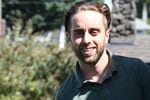
Myles Katz’s company bought a property in Jackson County with the goal of turning it into a psilocybin service center.
Kristian Foden-Vencil / OPB
“When the voters were presented with the facts, they were overwhelmingly in favor of what he can deliver,” Katz said. “It’s really the absence of education that would lead them to vote against the implementation of psilocybin services.”
Ashland and Medford’s differences with Jackson County are reflected elsewhere in Oregon. For example, Deschutes County has an opt-out measure on its ballot, while psilocybin therapy is set to roll out in Bend next year.
Back in Gilliam County, pharmacist Anna Charapata counts pills for customers at Murray’s Pharmacy on Condon High Street. She sees psilocybin therapy differently than many locals interviewed by OPB. She believes that psilocybin therapy is a responsible way to learn about the drug.
“I’ve read about uses in palliative care, so when people are dying,” Charapata said. “To me, that’s where the strongest evidence for any kind of medical use is: it’s people coming to grips with their mortality.”
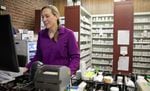
Pharmacist Anna Charapata believes that psilocybin therapy is a responsible way to learn about the drug.
Kristian Foden-Vencil / OPB
Regardless of what voters decide this election, two and a half million Oregonians will have local access to psilocybin therapy next year. This covers several rural areas, including Klamath Falls and Grants Pass.
[ad_2]
Source: In rural Oregon, psilocybin is on the ballot, but it’s still a mysteryMethadone Clinics Nearby – Methadone Clinics New York City – Methadone Clinics USA
[ad_1]

A common saying is that “addiction doesn’t discriminate,” which means it can affect anyone in any area of life, ranging from coal miners and truck drivers to executives, doctors, and lawyers. I have personal experience with what can be a destroyer of equal opportunities for wellness and happiness addiction as I have 14 years of recovering from a vicious addiction to prescription painkillers. My addiction didn’t care about my education, medical degree, race, gender, religion (or lack thereof), social status, or health.
Social determinants of health and addiction
But in another critical sense, addiction discriminates between people, in an unfair and deadly way, and in a way that shines a focus on tears in the socioeconomic network that holds our society together. Clinicians have long observed that social determinants of health (SDoH) can tip the scales against people, in their already daunting quest to recover from any kind of addiction. According to the World Health Organization, SDoH is defined as “the conditions in which people are born, grow, live, work and age. These circumstances are formed by the distribution of money, power and resources globally, nationally and locally. levels “.
The profound effect SDoH has on people struggling with addictions is confirmed by the evidence. In a 2019 study on drug and alcohol dependence, it was found that “in 17 states between 2002 and 2014, opioid overdoses were concentrated in more economically disadvantaged zip codes, indicated by higher poverty rates. and unemployment, as well as lower education and an average income for families. “Other studies have shown that poverty is a risk factor for opioid overdose, unemployment as a risk factor for overdose of lethal heroin and a low level of education as a risk factor for prescription overdose and for overdose mortality. Homelessness has also been shown to be associated with overdose, especially among veterans. Terrible results are associated with imprisonment, especially the period just after release, when overdose deaths are triggered. Systemic racism contributes to all these problems.
Research on SDoH reflects what I see clinically in the clinic in the city where I practice as a primary care physician. A patient may be stable for years with buprenorphine or methadone (medicines to manage cravings and aid recovery), but if they abruptly lose their home because of it, they may lose access to the organization and security of their lives. It becomes much harder for them to care for their families, attend medical appointments or support groups, fill out prescriptions, or practice any of the cares that are so important to staying in recovery. As such, they become much more vulnerable to relapse.
Stigma plays a role in addiction
Stigma is defined as “a mark of misfortune associated with a particular quality, circumstance, or person.” The bad look with which so many people have seen for so long those who have suffered addiction and the fact that we have criminalized drug use in our increasingly unpopular war on drugs have contributed to an attitude of “punish, not treat “. . Fortunately, this destructive attitude has evolved recently, as more people have come to understand that addiction is, at least in part, a brain disease and not a moral failure on the part of the individual. However, it leaves a lot of stigma and provides an additional barrier to people asking for the help they need, as they suffer unnecessary guilt and shame. Many healthcare professionals do not want to deal with people who suffer from addiction due to stigma. In short, stigma can lead to unnecessary suffering and more overdose deaths.
SDoH are significant factors that contribute to addiction, but they are not the only factors
In the end, with my addiction, I was lucky enough to see him on the other side. I will never know to what extent this was due to my own capacity for internal resilience, my family support, work resources and the support of colleagues, genetics, luck or, in large part, my favorable SDoH putting a useful finger on the scales. Certainly not all doctors get it; several of my colleagues have overdosed and are no longer with us. At the same time, many seemingly baffled patients I’ve treated in the past lead a healthy, stable life in recovery, so SDoH isn’t everything.
But clearly, SDoH plays a huge role in framing the odds of whether people are able to deal with and survive their addictions. As a society and as doctors, we need to go far beyond simply seeing drugs as the problem. In order to give all people with addiction the best possible opportunity to get in and stay in recovery, we must urgently begin to pay attention to the broader issues that allow addiction to infection, such as housing, employment, poverty, systemic racism and the effects of imprisonment (to name just a few). By strengthening society’s safety net, so that we all have access to basic human rights to food, shelter, and health care, we not only help those who suffer from addiction, but we also help others.
As a service to our readers, Harvard Health Publishing provides access to our library of archived content. Please note the date of the last revision or update of all articles. No content on this site, regardless of the date, should ever be used as a substitute for direct medical advice from your doctor or other qualified clinician.
[ad_2]
Source: https://www.health.harvard.edu/blog/poverty-homelessness-and-social-stigma-make-addiction-more-deadly-202109282602 [ad_2]Methadone Clinics Near Me – Methadone Clinic New York – Methadone Clinics USA
[ad_1]
MEDFORD, Ore– For Jill Hinojosa, Sept. 23 couldn’t be faster
“I was like this was like a dream, like it was really happening,” he said.

When the seven-year-old Medford resident was about to move into her new home after years of struggle
“The road has been pretty tough,” Jill said.
His first trip to the city of Medford was full of challenges, full of an internal battle of a drug addiction.
“I fought alcoholism, methamphetamine, prescription drugs and heroin,” he said.
He dates back 22 years when he lived in southern Ohio and southern California.
“I was addicted to drugs from my teens until I was 35,” he said.
When NewsWatch 12 asked Jill about what those moments were like, Jill was almost speechless. In that conversation, she said those years were an incredible challenge for her. Every day he struggled with his addiction it caused him new pain.
“Over and over again, he just broke up, lived on the street and had nothing,” Jill said. “You know, experiencing aches and pains.”
And they were some of the lowest points of his life.
“Not just the pain and grief of what was going on, but the pain and grief of what my children were witnessing.”
Jill says that moment of accomplishment became a turning point to reclaim her life and her family
“It just made me want to make a difference not just for me, but for them.”
But as the lives of Jill and her family began to improve, new challenges arose.
“As a single mom with only one income, you know, and there are times when we’ve had to go without some things we wanted,” Jill said.
For four years, Jill had to pay $ 1100 rent for a small three-bedroom apartment with enough space to squeeze a couple of people. All in an effort to keep a roof over your son’s heads. Jill told NewsWatch 12 that for a while she would have to sleep on the couch for her children to have their own rooms. It was after a while that his son offered his room to his mother.
Over the next few months, Jill was constantly looking for a new place to live, but with each step a new obstacle presented itself.
“I was denied all the applications I submitted,” he said. “Because I’ve made a little too much money, but not enough.”
Finally, in March 2019, after applying for a home through Habitat For Humanity, her work and dedication to rebuilding her life for her family paid off.
“In fact, I was tutoring a group of women through the program and they came in and surprised me in front of this whole group,” she said.
Now, after two years of waiting and more than 500 hours and sweat of blood and tears placed in her new home, along with several Habitat for Humanity volunteers and workers, Jill and her family have settled in. in his new home.
“I think it’s important for others to know that it’s possible to live this life of addiction and overcome it,” Jill said.
[ad_2]
Source: https://www.kdrv.com/content/news/Beat-the-odds-Medford-mother-who-struggled-with-past-drug-addictions-becomes-new-homeowner–575383631.html [ad_2]Methadone Clinic Nearby – Methadone Clinic NYC – Methadone Clinics USA


