Critiquing the methadone clinic next door
[ad_1]source
[ad_2]
Methadone Clinic Nearby – Methadone Clinics New York City – Methadone Clinics USA

Methadone Clinic Nearby – Methadone Clinics New York City – Methadone Clinics USA
Methadone Clinic Nearby – Methadone Clinic New York – Methadone Clinics USA
[ad_1]

Photo courtesy of workithealth.com Former Judge Linda Davis, who was previously appointed 41B District Judge in 2000, has left the role to become the executive director of Families Against Narcotics.
HANCOCK – Judge Linda Davis was known for her harsh convictions of people who used drugs. Now a retired district court judge and former Macomb County deputy prosecutor, Davis focused on imprisoning people charged with addiction-related crimes, rather than understanding why people with drug problems were repeat offenders.
“As a prosecutor, I ran our drug unit and I became a judge.” he told LegalNews.com. “I really thought I was doing society a favor by putting people who were using drugs and looking for drugs in prison.”
Davis was appointed to 41B District Court in 2000.
He admitted that while acting as a prosecutor and then as a judge, he believed that by sentencing people with substance abuse (SUD) to prison, he was doing society a favor, LegalNews reported on September 5, 2019.
Davis ’harsh views on people with LDS changed when his 17-year-old daughter, a high school student and athlete, suffered a knee injury that required surgery. As prescribed opioid analgesics, they led to their subsequent heroin addiction. One night, Davis heard the words that make all parents’ hearts seem to stop: “Mother, I’m a heroine. I need help. “
Davis told Legal News writer Linda Laderman that she was devastated and embarrassed.
“It was extremely difficult to talk about it at first,” she said “It simply came to our notice then. Before, he still looked at addiction as a moral failure. adding that he did not understand that people could become addicted due to sports injuries and tooth stretching.
While organizing help for his daughter, Davis was asked to attend a town hall meeting on drug addictions. In front of the other attendees, Davis said she saw her parents experiencing the same thing, and for her it was clear that there was a lot of shame and humiliation in the group. Then Davis realized something.
“It was clear that the stigma associated with drug addiction made it difficult to get good viable help for people.” Davis said. “The treatment facilities we called did not show any compassion and did not encourage the possibility of recovery. All of these things made me realize that the system needed to change. “
He realized that he had the capacity and connections to understand that the SOUTH is not a choice, not a moral failure, but a disease.
“We are wasting taxpayers’ dollars by putting them in jail untreated,” she said.
Davis has co-founded the grassroots organization Families Against Narcotics (FAN). In March 2007, she left her role as a judge to become the organization’s first executive director.
Fourteen years later, this month, Davis is on the Upper Peninsula, speaking at public engagements, and continues to identify an important aspect of addiction that the general public does not realize or choose to ignore: stigmas only derail the truth. and the education surrounding addiction: something he said is not a moral failure.
Davis told the Daily Mining Gazette Tuesday morning that the stigma is the number 1 block of treatment.
“People (who) suffer from a substance use disorder are self-deprecating” she said. “They hate the decisions they have made; they feel that there is no way out, then, when we embarrass them and make them feel unworthy, because of the stigma around addiction, they often feel that there is no help available, which is totally the wrong message we want to be sending people “.
Davis went on to say that LDS is a treatable disease and “We need to start talking about it as a disease, rather than as a moral failure.”
Last minute news and more in the inbox
[ad_2]Methadone Clinic Nearby – Methadone Clinic NYC – Methadone Clinics USA
[ad_1] 
My name is Wendell Stone and my sobriety date is August 17, 2019.
I am always grateful for that day and always grateful to the New Leaf Clinic, 215 W. Breckinridge St., for providing me with the tools I need to stay sober after that day. I have tried almost every recovery program in Louisville and failed. It wasn’t until I found New Leaf that I was able to maintain my sobriety.
Once I managed to be sober for six months, I will never forget how I felt. He still had no purpose in life or any place to go. I had no goal or anyone I could lean on to get support. The only thing he had was that date, six months since he had last used a mind-altering substance.
The power to transform:1 day. 1 huge impact. How to Support Giving Good Louisville
Someone recommended me to look into an intensive outpatient program called New Leaf Clinic, and that was the best advice they could have given me. New Leaf not only gave me a place to put my head, but paid me rent during my stay at the clinic. When I didn’t have a trip, they picked me up and dropped me off. When I was hungry, they fed me. If a barrier got in the way, New Leaf not only told me how to break it, but helped me break it.
With all the excuses I could find to stay complacent with my situation, New Life presented a solution to encourage progress.
Month:The Louisville Pride Foundation opens an LGBTQ center. How to help during Give for good
New Leaf challenged me to reach my full potential. Coming from where I have been, it was not an easy task, but they were a definitive answer to all my prayers. Most of the IOP programs I’ve attended are basic education, but there was something about how the group leaders in New Leaf broke the substance use disorder that helped me understand what was going on with my addiction.
I felt like I had found a new family and was not ashamed to share things I once tried to hide in a closet. New Leaf taught me to take situations of remorse and look them in the eye. My past, which I once used as self-compassion to justify drinking or using drugs, became a learning experience.
Music for everyone:As a Kentucky community group makes this happen every day
New Leaf loved me again when I was in a desperate mood, and even after completing the program, I was kept under the umbrella of the New Leaf Clinic.
After being in active addiction for over two decades, today I am over two years clean and sober, I work full time and return to giving support by sponsoring other people who suffer from addiction. On September 17, the annual delivery day of the Louisville Community Foundation, Give for Good Louisville, I want to ask for your support to continue our mission.
God is good and thank God for the New Leaf Clinic.
Month:How cultured mornings encourage young people to learn about themselves every bite
Wendell Stone is a student in the New Leaf Clinic recovery program.
[ad_2]Methadone Clinics Near Me – Methadone Clinic NYC – Methadone Clinics USA
[ad_1]
GLOBAL

The international education sector has a glaring problem that few admit. The sector is addicted to growth and this addiction goes against global climate goals and institutional commitments to act with urgency proportional to the severity of the crisis.
The language of the 2015 Paris Agreement was appropriate for the times. He recognized the need for coordinated global action to address the imminent threat of climate change. In five years of inadequate response, “climate crisis” routinely replaced “climate change” among those calling for action.
As we approach 2023, ‘climate disruption’ more accurately captures the severity of the converging crises of biodiversity loss, public health threats, collapsing natural systems, forced migration and more .
It is time for international educators to reflect on what sustainability looks like for the sector. Rather than striving for ever-increasing numbers of students, sustainability involves maintaining a level of activity determined to have positive climate impacts greater than or equal to its negative climate impacts.
To maintain is to maintain, not shrink or grow. If we are to align with the global goal of limiting temperature rise to 1.5 degrees Celsius, the international education sector needs to reassess our priorities and aim for real sustainability.
This is not a call to reduce international education or to diminish the international mindset. On the contrary, it is a call to expand the positive climate impacts of the work by focusing on sustainability to progressively mitigate the damage that the sector inflicts on the planet and its inhabitants.
As an industry made up of people committed to justice, equity and human rights, we can no longer turn a blind eye to the emissions impacts of our work. Climate pledges, such as those outlined in the CANIE Agreement and reinforced by the Glasgow Paper, must be supported by thoughtful, deliberate and science-based implementation.
Ambitious and achievable
Until sustainable aviation fuel is widely accessible, reducing emissions while continuing to develop global student learning and sustaining critical research collaborations remains the most pressing challenge facing the industry.
To make up for years of insufficient action, we must radically decarbonize our work without further delay.
The radical decarbonisation of international education can be defined as the proposed implementation of three components:
• Redirect resources and growth effort towards maintaining 2019 (pre-COVID) activity levels.
• Adopt and enforce policies and practices that halve 2019 emissions levels each decade to achieve net zero emissions by 2050, and
• Limit the use of offsets to no more than 10% of 2019 emissions levels.
Business travel
To align with the Carbon Act and science-based targets needed to achieve net zero emissions by mid-century, international education professionals must reduce greenhouse gas (GHG) emissions from air travel 8% annually compared to the 2019 reference line.
Reducing emissions by 8% year-on-year would result in a 2023-24 GHG travel budget that is 72% of the 2019-20 baseline. Once the budget is exhausted, no additional emission-intensive trips should be allowed.
Strict enforcement will encourage creativity when stretching GEH’s travel budget. For example, using ground transport to and from major hubs to minimize flights, traveling by coach instead of business class and extending stays to combine purposes are some of the many ways to maintain current activity levels while reduce emissions.
Micro international experiences
In 2018-19, nearly 19 percent of U.S. education abroad programs lasted less than two weeks. These micro-programs represent more than 65,000 round-trip student flights.
Incorporating estimated climate impact into program approval and evaluation criteria would provide practitioners with a metric to determine which programs support institutional climate goals.
Given the urgency of climate breakdown, it could be argued that a program requiring air travel of less than two weeks should only be offered if the content is focused on climate action and has measurable decarbonisation outcomes.
In many institutional contexts, transformative cultural engagement does not require international travel. Accordingly, intentionally designed local programs could serve as valuable alternatives to non-climate-focused international micro-experiences.
Major cities in international education source countries around the world are often home to vibrant immigrant communities. Programs designed in collaboration with these communities could be just as impactful as a program abroad.
Student recruitment, retention and travel
The shift in focus from growth to maintenance must be applied to the recruitment and retention of international students.
International educators are aware of the need to provide various types of support to international students so that they can engage with their host institution and thrive while achieving their academic goals. The benefits of retaining financial support, helping to combat loneliness, and engaging with the campus community are often self-evident to the institution and the student.
However, the climate impact of a student returning home must also be quantified. Similarly, emissions from international educational activity can be avoided by providing services to students to reduce independent air travel. For example, international students may choose to stay in their host community during holiday breaks if they have cultural programming that appeals to them.
Similarly, students could be encouraged to participate in pre-planned excursions in the surrounding area rather than traveling independently. Group travel by train or coach can be an enjoyable opportunity to bond with fellow travelers.
At what price?
International education is essential to foster respect for different cultures and to build the dispositions needed to collaboratively solve global problems. Climate disruption is the most pressing issue of our time and international education contributes to the problem and has the ability to play a critical role in solving it.
Although the sector is unlikely to offset its historical emissions, there is still time to be on track to meet the global climate goal of net zero by mid-century.
Radical decarbonisation is the path to a sustainable future for international education. It is ambitious and achievable, but it will be much more difficult than maintaining the momentum of the status quo.
As we face the challenge of fundamentally transforming an entire global sector, it can be helpful to remember that nothing is more worthy of our effort, not even international education, than ensuring that our planet can support life.
Adrienne Fusek is a professor at San Diego State University, United States, and a board member of the Climate Action Network for International Educators.
[ad_2]Methadone Clinic In My Area – Methadone Clinic New York City – Methadone Clinics USA
[ad_1]
December 7, 2022
His bloodassistant professor at Arizona State University Department of Psychology, knows the importance of scientific research in the fight against addiction, mental health problems and substance abuse. Conducts research on alcohol abuse in marginalized populations, with recent findings highlighted link between racial discrimination and alcohol consumptionthe protective role of personality and alcohol consumption problemsand the importance of parents transitioning to college during the pandemic.
Su, a developmental psychologist with training in human development and statistical/molecular genetics, recently gave a presentation on behalf of the Wellbeing, Advocacy, Voices, Education and Support (WAVES) initiative of the organization Chinese Americans United. He spoke in Chinese about alcohol use, mental health and support for Chinese American teenagers.
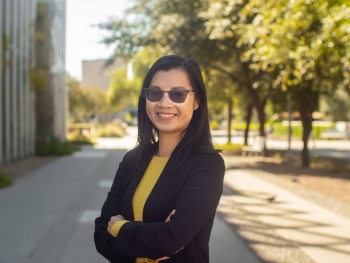
Jinni Su, an assistant professor in ASU’s Department of Psychology, knows the importance of scientific research in the fight against addiction, mental health issues and substance abuse. Photo courtesy of the ASU Department of Psychology
Download the full image
“I study the problems related to alcohol consumption and the mental health of teenagers and young people. I try to understand the risk and protective factors that influence mental health and alcohol-related problems,” Su said. “One of my focuses is trying to understand these processes within racial and ethnic minority populations, because they face their own unique challenges and are relatively underrepresented in research.”
Drinking as a coping mechanism for problems such as increased pandemic stress, inflation or to deal with discrimination can lead to long-term challenges. More than 3,500 people died of alcohol-related causes in Arizona in 2022and 60% of these cases stemmed from problems related to chronic excessive alcohol use, such as alcohol use disorder.
“My dream is, of course, for my work to make an impact and be a leader of change to inform practices, prevention programs and education that can really help serve people,” Su said.
More than 305,851 Asian American/Pacific Islanders live in Maricopa County, and the population has experienced a growth rate of 138% since 2000. Many of them speak English as a second language and therefore speak of Chinese research makes a difference in connecting with the community and preventing problems such as adolescent alcohol abuse.
According to UCA WAVES, many Chinese American adolescents suffer from mental health problems in silence due to the stigma associated with seeking treatment and may turn to alternative methods to cope with the challenges of bilingualism or discrimination.
“It’s very special for me to have the opportunity to connect with people who are working on the front lines of the WAVES program, a program that interacts with and serves members of my community,” Su said, and add: “I hope that you can become more and more involved and can contribute to the promotion of the mental health of Chinese American teenagers.”
Video by Jinni Su – WAVES
Video courtesy of the ASU Department of Psychology
Related: ASU launches first online master’s degree in addiction psychology with in-person internship
[ad_2]Methadone Clinics In My Area – Methadone Clinic New York – Methadone Clinics USA


 Click Here To Call Now