[ad_1]

There is no single path to homelessness. Lakeyia Scott endured a lifetime of addiction and violence in rural Georgia before finding sobriety and refuge in Augusta three years ago.
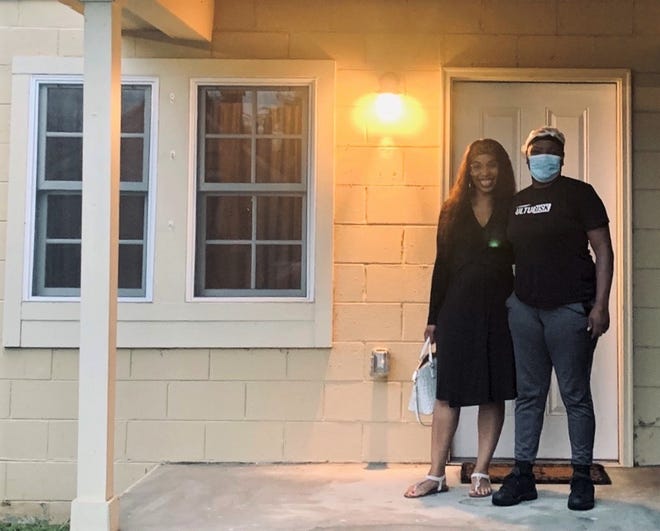
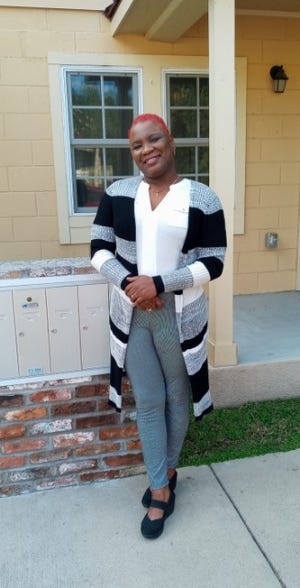
With the help of social services and his own efforts, Scott, 43, now works on a low-paying basis and has no disability payments and has a home. She lives in permanent support housing in Olde Town, but plans to house it in a Turn Back the Block house next year.
One person who played an important role in Scott’s transformation is Cassandra Walton, case manager for the CSRA Economic Opportunity Authority. The EOA is an Augustan non-profit organization that operates social programs throughout the region.
Scott connected with Walton through the Marion Barnes Resource Center for the Homeless on East Boundary Street. But moving from homeless to refugee was not a free trip, Walton said.
“When I met Lakeyia, I looked her straight in the face. I said, ‘I’m a case manager and I’m going to do 20% of the work,’ ”Walton said. The rest was Scott’s thing.
Walton incorporated Scott into the EOA support housing (a set of reconstructed historic remote homes) and has since been on an upward trajectory, Walton said.
The solution?:Augusta’s working group seeks to change strategies and increase housing for the city’s shelters
It was a long trip for the native of Dorchester, Massachusetts, who moved with her mother to Washington County, Washington, after a series of tragedies, including sexual abuse, when she was 11 years old.
Despite being a gifted student, Scott fell out with the wrong people and, at 17, was hooked on crack cocaine.
“When I turned 17, I went to jail,” Scott said, baffled by his troubled past. “I received a charge (selling drugs). I did a lot to maintain my habit, to continue. And I managed to keep selling as well ”.
Released at age 19 and feeling uncertain about his place in the world, Scott returned to his mother’s home.
“I went home to mom,” she said. “Mom talks all this mess, but she’ll give you this opportunity.”
His continued use of cocaine would make life with his mother unsustainable. Once, when Scott was in full addiction, his mother revealed the impact he was having.
“I was drugged with crack and everything (I was 100 years old) I probably wear a size 0 in pants,” he said, crying softly. “He said,‘ I want you to see what you’ve done to me ’and my mom’s skin had exploded, the nerves in her skin had exploded all over her body,” Scott said.
Month:“There’s no place to put them”: Augusta’s homeless working group is looking for solutions
Scott said he wasn’t ready to stop using it, but he knew he had to leave his mother’s house.
“I told him, ‘You have a choice,’ you can sit there and keep doing it, or get out of his face. I’d rather get out of his face, ‘” he said.
Scott found an escape at a local beverage house.
“My mother and I weren’t going to ride horses, so I got married. I married a man I met in a week, ”he said, laughing.
He became a role model for the young addict. “I always had someone to save me. Not once did I have to do anything on my own, “he said.” Please note that I am 20. I have a hundred pounds and I will use it. “
Her first husband was older than her mother and kept her supplied with cocaine, but the relationship collapsed and Scott soon faced another charge of selling drugs.
Substance abuse and mental health resources were scarce, if not non-existent, in Washington County, located about 70 miles southwest of Augusta. Scott’s next husband, a drug dealer, kept her supplied with crack but abused her non-stop.
“I let it win me for seven years,” he said. Once, “he punched me in the eyes so hard I bit my tongue in half.”
Month:A new homeless resource center opens in East Augusta
As the years progressed, Scott said he would sleep anywhere (a grave, a porch, a couch) as he moved from house to house, taking a few more brushes with the police. Along the way, she was diagnosed with PTSD for sexual assault and was eligible for a Social Security disability check.
Later, an older merchant with whom he entered entered prison. While he was not there, a grease fire burned the abandoned house. With all his belongings and a lost vehicle, Scott said it was a turning point.
“I knew there was no one else who could try to get ahead,” he said.
Scott left Washington County for the last time and arrived at the August Salvation Army shelter on Greene Street in 2018 with $ 700 in his pocket. Ministries around the shelter kept her fed, but the shelter was full and dirty, she said.
The first morning he left the shelter, a woman with children offered him crack.
“Frightened to death” of encountering traps or bad characters, Scott recalled his mother’s advice: look for Willie Walker, his stepfather’s first cousin who had been homeless in Augusta for years. Walker was known for giving advice to the homeless, but for not helping herself, she said.
Walker became “an angel on my journey,” Scott said. “He showed me how to move, do things and talk to people. In fact, he was the one who told me to talk to Mrs. Walton about my addiction.”
The conversation was a turning point. Scott received treatment for PTSD and addiction and remains sober after three years. “I won’t be back. The taste is gone,” he said.
Walker’s death from the January cold outside of a downtown resource center would become a trigger for Agusta’s new homeless working group.
When Scott calmed down, the battle would not have ended for either her or others as the days passed, the suitcases tucked away by the railroad tracks behind the shelter, walking the streets looking for a place to live.
One of the large plants in the aging city center wanted $ 1,200 just to get the deposit, rent and other charges, he said.
Month:The plan calls for Augusta to build and operate a homeless shelter using American Rescue Plan funds
Once he entered the EOA housing, Walton would end up persuading Scott to come down from Social Security to earn more and Scott now has a job at Kimberly Clark. He will soon open land at Turn Back the Block, which is part of a neighborhood revitalization program in Harrisburg, Augusta.
Month:The dreams of the original South Augusta to return to Harrisburg come true
Scott’s track record of homelessness is “really a scenario at best,” Walton said.
“Lakeyia is motivated towards its own success,” he said. “We’re all in one decision to be a better person, and she made that decision and stayed with her.”
[ad_2]
Source: https://www.augustachronicle.com/story/news/2021/09/30/augusta-survivor-addiction-homelessness-violence-help-services/5881621001/ [ad_2]Methadone Clinic Near Me – Methadone Clinics New York – Methadone Clinics USA
[ad_1]
According to the Centers for Disease Control and Prevention (CDC), traumatic events are marked by a sense of horror, helplessness, serious injury, or the threat of serious injury or death. Trauma can have adverse and lasting effects on an individual’s learning, relationships, functioning, and mental, physical, social, emotional, and spiritual well-being.
Trauma is a risk factor in almost all substance use disorders (SUDs) and decades of research have found a strong link between exposure to traumatic events and SUDs.
As a state and nation, we have experienced a great deal of trauma in the treatment of the COVID-19 pandemic. This trauma can be seen in the alarming increase in overdose deaths and substance abuse that we are seeing in Pennsylvania after the pandemic.
Month:The PA must maintain its focus on the overdose epidemic
CDC data show that there were 5,217 overdose deaths in Pennsylvania in 2020, an increase of more than 16% over 2019. We need to offer hope to those who are struggling with LDS. September is the perfect opportunity to provide that hope.
Month:Legislative Republican leaders will not extend the Wolf government’s opioid statement. Here’s why
September is National Recovery Month: a time to come together to celebrate people in recovery across the state and nation. It is a special time to celebrate successes, spread the encouraging message that treatment works, and ultimately break the stigma associated with LDS.
This is a reminder to all Pennsylvanians: You are not alone. Drug and alcohol treatment providers are open and available to provide life-saving treatment. Community recovery organizations can help you secure housing, as well as case management and other recovery support services. Funding is also available through county drug and alcohol offices to help you pay for treatment if you are uninsured or underinsured.
The Wolf administration is committed to providing high-quality drug and alcohol treatment services to all Pennsylvanians who suffer from a substance use disorder, without discrimination or prejudice. With current resources available as well as ongoing ones, we consolidate our commitment to reversing this growing trend of overdose deaths and providing quality care for everyone and everyone in need of help.
Getting help can be scary, but there is hope in the help available to Pennsylvanians.
The Pennsylvania’s Get Help Now helpline (1-800-662-HELP (4357)) is free, confidential, available 24 hours a day, 7 days a week, and has trained professionals who can provide a direct connection. hot to a treatment or recovery service provider. in your local area. By calling the hotline, people are assessed for their needs and turn to services and supports to help them on their journey to recovery. If you’re not comfortable talking on the phone, there’s also a chat line.
Alcohol and drug offices are also available in all counties in Pennsylvania to help people find the right care or services for themselves or a loved one.
In addition, we announced a partnership with national nonprofit organizations, Shatterproof, to develop and implement the ATLAS Platform for Addiction Treatment, Evaluation, and Standards. This new tool will be available in the spring of 2022 and during the 12-month implementation period we will work to customize and align ATLAS with ongoing initiatives in Pennsylvania with the goal of strengthening treatment systems by ensuring that care it is offered through evidence-based best practices.
ATLAS will evaluate the use of evidence-based best practices by drug and alcohol treatment providers and publicly display the information to include reviews of patients who have received care. This tool, which will be voluntary for providers, will help us monitor the quality and effectiveness of services across the state and help instill a sense of transparency and trust among those seeking help. When fully implemented, this platform will serve as one more tool in the growing toolbox to help Pennsylvanians find high-quality drug and alcohol treatment services for themselves, a friend, or a loved one.
Again, if someone or someone you love is struggling, remember that you are not alone. When people receive appropriate treatment for a substance use disorder, recovery is not only possible, but likely.
Jennifer Smith is the secretary of the Pennsylvania Department of Drug and Alcohol Programs.
[ad_2]
Source: https://www.goerie.com/story/opinion/2021/09/27/treatment-available-those-struggling-addiction-pa/5834036001/ [ad_2]Methadone Clinic In My Area – Methadone Clinic New York City – Methadone Clinics USA
[ad_1]
More than 20 million Americans are struggling with addiction, but there are only 4,400 addiction specialists to help them. Between May 20, 202021, the Centers for Disease Control and Prevention reports that drug overdose deaths in the United States exceeded 100,000 and in Michigan, there were 2,570 overdose deaths.
Dear Poland
“Addiction is killing far more people than we like to acknowledge or have the means to acknowledge,” said Cara Poland, assistant professor in the Department of Obstetrics, Gynecology and Reproductive Biology at State University’s College of Human Medicine. of Michigan. “We know that most doctors only get two to 10 hours of education in addictions in medical school and their residency, and we’re doing something about that.”
In 2018, using $1.5 million in state opioid response funds, Poland and partners from MSU and Wayne State University created the Michigan Collaborative Addiction Resources and Education System. The MI CARES program guides and supports physicians through the Practice Pathway program for the subspecialty of addiction medicine.
“At the time, we were just a pilot program with a modest goal: to train half a dozen Michigan physicians as addiction specialists,” Poland said. “But word spread, and so far, nearly 500 doctors from 46 states and the District of Columbia and Puerto Rico have signed up for the training.”
Prior to 2019, Michigan had fewer than 200 physicians certified by the American Board of Medical Specialties to treat addiction with none practicing in the Upper Peninsula. With the help of MI CARES, these numbers are increasing. Now, there are an additional 115 physicians enrolled in the program in Michigan, including seven physicians from the Upper Peninsula.
The program has recently expanded to include students from Michigan State University’s Department of Human Medicine, Osteopathic Medicine and the College of Nursing. The MI CARES program is available to first-year medical students at the Michigan State University College of Human Medicine and as an elective for current students. Of the 36 first-year electives taught by Poland and Jamie Alan, associate professor in the Department of Pharmacology and Toxicology, all 36 said they would recommend the elective to a colleague.
With a second round of funding extending to September 2022, Poland is modifying the MI CARES curriculum so that other medical schools can use it in their programs. An important part of this is removing stigmas that place blame on substance use disorders or SUDs.
“Studies show that when we use the words ‘substance abuse’ in our notes, we literally provide worse care to our patients and when we use ‘substance use,’ we provide better care,” Poland said. “What easier way to provide better care than just changing the words we use?”
The hope is that training like the MI CARES program will reduce the stigma of SUDs and help doctors recognize that a patient with an SUD is just like any other patient with a chronic illness. For Poland, the issue of substance use disorder is more than a professional interest, it’s a personal one.
“My younger brother died as a result of his alcohol use disorder,” Poland said. “I was already becoming an addiction specialist, but his death ignited my fire. It used to be a job and now it’s my passion. It’s my life.”
[ad_2]
Source: Fighting Addiction and Eliminating the Stigma | MSU todayMethadone Clinic Near Me – Methadone Clinics New York City – Methadone Clinics USA