[ad_1]
- At this week’s COP27 climate summit, the US government reiterated its commitment to ending global deforestation, a major driver of the climate emergency.
- However, as a recent major research report by Earthsight and Mongabay showed, the US continues to contribute to illegal deforestation abroad through its unrestricted consumption of the resulting goods.
- This opinion piece argues that if the United States truly aspires to leadership on forests, the United States must first put its own house in order by improving and better enforcing existing legislation that prohibits imports of stolen timber and passing urgently draft legislation to extend these controls to “forest risk products”. ‘like beef and soy.
- This post is a comment. The opinions expressed are those of the author, not necessarily Mongabay.
The world is waking up to the climate crisis. But time is short. It is a problem, then, that the populations of the rich countries responsible for this impending disaster are ignorant of the extent to which their own actions are driving it. The long and complex supply chains of globalization mean that the impacts of our consumption are hidden from us.
Our impact on forests is one example. As my organization’s research has repeatedly shown, precious rainforests are razed, indigenous people are abused, and environmental defenders are killed to provide our everyday goods. If American shoppers could see what they are complicit in, they would want these products taken off the shelves.
Now we have the opportunity to do just that. A bill currently in Congress, the US Forestry Act, would ban the importation of agricultural goods such as soybeans and beef produced abroad on land illegally logged.
Up to 90% of the forests cut and burned in the Brazilian Amazon are illegally logged for these products. This is not subsistence farming but big business; much of it is export driven. Laws like the US Forestry Act could help stop this destruction by choking off much of the cash that funded it.
These laws must be passed urgently. To be effective, however, they must also be well designed and properly implemented and enforced. Lessons must be learned from past failures. The US banned imports of illegally logged timber 14 years ago. However, as our latest report, The Fixers, dramatically demonstrates, the suspicious wood keeps coming in.
Through leaked documents, court documents and interviews with prosecutors, Earthsight and Mongabay revealed a catalog of crimes by one of Brazil’s largest exporters of tropical wood products. Bribery of officials. Links to the largest illegal timber bust in Brazilian history. Bleaching of wood worth millions. Illegal timber handling from a precious indigenous reserve.
 Credit: Samuel Bono/Earthsight
Despite many of these scandals already in the public domain and the celebrated U.S. ban on illegal timber, over the past five years the Brazilian company involved has been able to ship land to the U.S. with a retail value of nearly a quarter of a billion dollars. Its products are sold across the United States, including in branches of home improvement giant Menards.
The U.S. ban on illegal timber has failed for a number of reasons, primarily because it failed to recognize the reality of importing from a place like Brazil, where the illegality of the goods can be difficult to prove and is encouraged even by high government officials.
In the European Union, lawmakers have reversed the burden of proof, requiring importers to trace these products back to the source and prove they are legitimate. This same rule should apply to laws related to US imports of “forest hazard commodities,” including timber.
In 2021, the Biden administration unveiled its “Plan to Conserve Global Forests” with laudable goals, but these efforts will fail if they fail to recognize the truth about what causes deforestation: the limitless power of wood and ‘agribusiness and the corruption and government failures it causes. . Calls to forest countries to do more will fall on deaf ears as long as the US continues to profit from the destruction. After all, no one listens to a hypocrite.
 Export of wood to the USA. Image from Earthsight
Sam Lawson is the director of Earthsight.
[ad_2]
Source: If America Aspires to Climate Leadership, It Must Break Its Addiction to Deforestation Products (Commentary)Methadone Clinic In My Area – Methadone Clinic New York – Methadone Clinics USA
[ad_1]
The NJ PBS digital documentary series “21” examines a simple question: Does where you live in the state affect how you live? The “21” series profiles one person in each of New Jersey’s 21 counties and looks at the social determinants that affect that person’s life.
The latest film profiles Mercer County’s Stacey Ross, a woman who struggled much of her life with addiction, but has since recovered and now uses her personal experience to help those who they fight the same disease. Ross is a Certified Peer Recovery Specialist for the Mercer Council, and spends her days working with those in need around Trenton.
look here

The opinions expressed by our advertisers and sponsors are their own and are not endorsed by NJ Spotlight News.
[ad_2]
Source: Series ’21’: A profile of Stacey Ross and her work against addiction | videoMethadone Clinic In My Area – Methadone Clinics NYC – Methadone Clinics USA
[ad_1]

Rich-Joseph Facun
Director of the Ohio Department of Mental Health and Addiction Services visiting Ohio University.
Ohio University hosted Lori Criss, Director of the Ohio Department of Mental Health and Addiction Services, and her staff for an immersive presentation on the University’s use of virtual reality.
“Today I am very excited to learn about the possibilities of virtual reality,” said Criss. “This is definitely a future-oriented space for our department.”
Ohio University faculty gave Criss and his team demonstrations about the University’s cutting-edge virtual reality technology and what it means for the future of health care and law enforcement.
The first simulation, “Destiny,” simulates the experience of working with health care patients in Appalachia and provides insight into regional values that can inform ways in which professionals can provide better care.
The decision to use virtual reality to convey difficult situations was extremely intentional and intended to convey a more human element to the complexities faced by those in need of health care, especially in Appalachia. During the simulation, a person wearing the virtual reality glasses will enter episodes where the characters interact with their health care providers, including doctors, nurses and pharmacists, as well as social workers and families.
“There are animated versions of this that I’ve seen, and to me they’re not as effective,” said John McCarthy, interim dean of the College of Health Sciences and Professions.
The simulation revolves around Destiny, a 20-something woman from Appalachia. She’s pregnant, unmarried, her parents are largely absent, and she’s also addicted to opioids. The simulation plays out like a movie, starting with Destiny smoking a cigarette and heading to her first doctor’s appointment for the baby, while her partner passes out on opioids.
“It didn’t feel like Hollywood,” Criss said after the experience.
Criss attested to the gravity of the experience of growing up in Appalachia, stating that even the wood paneling of the houses reminded him of his childhood.
The project is designed to educate health care professionals about aspects of Appalachian culture and help them recognize implicit biases that can complicate care for patients in the region. The series is part of a larger project, “Virtual Reality Simulations to Address Provider Bias and Cultural Competency,” which is funded by a grant from the Ohio Medicaid Policy and Technical Assistance Program.
The virtual reality was created by faculty with the College of Health Sciences and Professions and the Heritage College of Osteopathic Medicine and was developed by the Game Research and Immersive Design (GRID) Lab at the Scripps College of Communication, which serves as an innovative and creative hub for students, faculty and staff for research and project development.
The project was led by co-principal researchers McCarthy and Deborah Henderson, professor and director of the School of Nursing. Other researchers on the project include Elizabeth Beverly, assistant professor of family medicine at the Heritage College of Osteopathic Medicine; John Bowditch, director of the GRID Lab; and Eric Williams, professor at Scripps College of Communication.
The faculty then presented a virtual reality training designed for Appalachian law enforcement students. The training is part of the Voinovich School of Leadership and Public Service’s Appalachian Law Enforcement Initiative, an initiative to bring law enforcement and communities together to improve community and police relations. Because distance, small populations and low budgets often make it difficult to train law enforcement in the region, virtual reality is being used to overcome these limitations and provide officers with much more immersive training.

During the presentation, participants experience OHIO’s virtual reality programs firsthand.
In the simulation, two officers are sent to deal with an Iraq war veteran suffering from a PTSD episode.
The Appalachian Law Enforcement Initiative is designed to engage entire communities, bringing together law enforcement officers, community officers and public administrators in a partnership to reduce the use of force, teach de-escalation techniques and improve outcomes for law enforcement for both the community and the police.
To overcome these barriers, the initiative plans to use virtual reality in its training. Rather than using the technology in a traditionally tactical sense, the goal of the initiative is to immerse law enforcement in an experience that can change their perspectives, while creating a structure to engage public policy makers and community leaders. Officers in training wear virtual reality headsets to look around and learn from the training environment, providing a more immersive experience.
[ad_2]
Source: https://news.google.com/__i/rss/rd/articles/CBMicmh0dHBzOi8vd3d3Lm9oaW8uZWR1L25ld3MvMjAyMi8xMC9vaGlvLW1lbnRhbC1oZWFsdGgtYW5kLWFkZGljdGlvbi1kaXJlY3Rvci1leHBlcmllbmNlcy1vaGlvcy12ci1hbmQtaXRzLXBvdGVudGlhbNIBAA?oc=5 [ad_2]Methadone Clinic Nearby – Methadone Clinics New York City – Methadone Clinics USA

 Credit: Samuel Bono/Earthsight
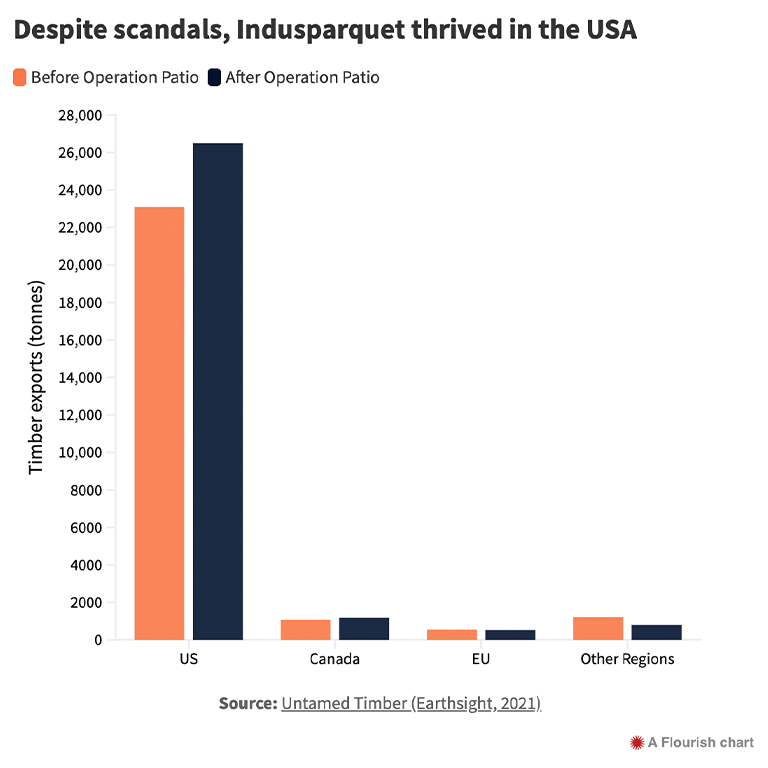 Export of wood to the USA. Image from Earthsight


